

A New Chapter in My Scientific Journey: My Global Internship Experience in South Korea
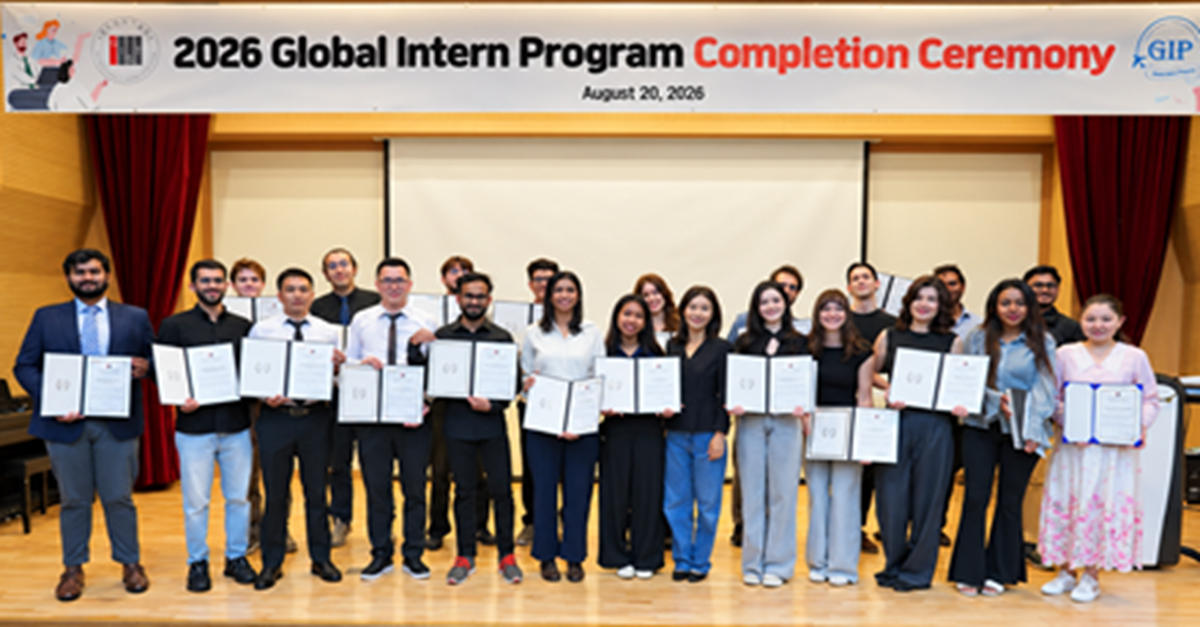
Participating in the 2026 Global Internship Program at the Gwangju Institute of Science and Technology (GIST) in the Republic of Korea became one of the most important academic experiences of my life. The internship ran from late June to late August and allowed me to learn in an intensive international research environment. I joined the program to gain research experience, strengthen my practical skills, and understand how scientific research is conducted in an advanced laboratory setting.
At GIST, I worked in the Energy Spectroscopy Laboratory under the supervision of Professor Yoonsoo Pang, with Jongwon Im as my mentor. The laboratory environment differed from what I had experienced before. I was introduced to modern instruments, experimental approaches, and research methods used in spectroscopy laboratories. Some equipment and procedures were unfamiliar at first, but step by step I learned how they worked and how researchers use them to answer scientific questions. My Master’s research at Samarkand State University (SamSU) focused mainly on sorption processes and materials for metal adsorption. Although the research at GIST differed from my thesis topic, this contrast made the internship especially valuable. It let me see physical chemistry from another perspective and how different subfields can complement one another. I learned how advanced spectroscopy can reveal molecular processes that occur very quickly after light interacts with a molecule. A major part of my research experience involved two light-sensitive organic molecules, DNS and DMABNA. The study explored how charge moves in these molecules after they absorb light and why the observed dynamics differ. Both molecules contain regions associated with charge donation and acceptance, but their different molecular structures influence their excited-state behavior. The reported charge-transfer timescales were about 0.41 picoseconds for DNS and 3.3 picoseconds for DMABNA. These values indicate substantially faster dynamics for DNS under the conditions studied. The work also considered how the surrounding solvents influenced the molecules’ behavior. Solvent properties can affect the stabilization and relaxation of light-excited states, illustrating how both molecular structure and local environment can influence ultrafast photophysical processes.
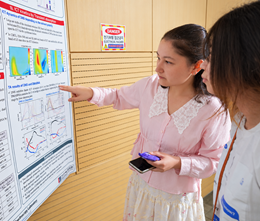
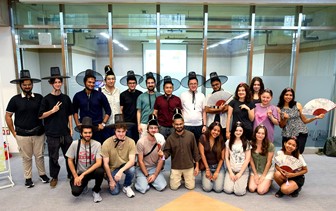
What impressed me most was the possibility of studying processes that cannot be observed directly with the naked eye. I often thought of it as watching a scientific movie: rather than seeing only the initial state and the final result, advanced spectroscopic methods allow researchers to investigate what happens in between. This perspective deepened my understanding of molecular processes and strengthened my interest in experimental research. Laboratory work was only one part of my learning experience. Weekly research meetings organized by Professor Pang were equally important. Researchers presented results, discussed possible explanations, asked critical questions, and considered the next steps. I learned that science is not only about collecting data; it also requires careful interpretation, verification, discussion, and a clear explanation of why the results matter. These meetings also showed me how research findings are developed into scientific papers. I came to understand that effective academic writing requires a clear argument, careful evaluation of data, comparison of possible explanations, collaboration, and logical communication. This experience strengthened my understanding of scientific writing and critical thinking. My mentor, Jongwon Im, played an important role in my progress. He patiently explained theoretical ideas and practical procedures, encouraged me to ask questions, and helped me work through unfamiliar instruments, experiments, and concepts. His guidance helped me become more confident and independent in the laboratory. The international environment was another valuable part of the program. More than 20 young researchers from different countries participated, including Cambodia, Colombia, Egypt, France, India, Iran, Kazakhstan, Morocco, Nepal, Pakistan, Palestine, Russia, Türkiye, and the United States. Sharing ideas and comparing experiences with people from different academic and cultural backgrounds helped me appreciate the value of international cooperation.
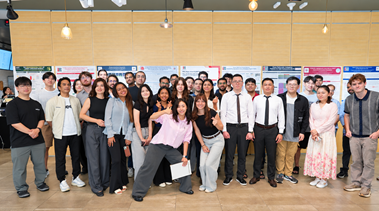
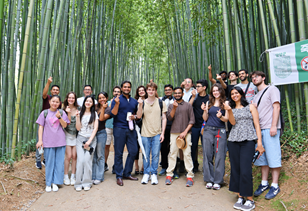
Our discussions extended beyond chemistry to biology, physics, information technology, artificial intelligence, and innovation. They showed me that many contemporary scientific challenges require interdisciplinary approaches. We discussed how digital tools and artificial intelligence can support data analysis, experiment planning, interpretation, and the development of new research methods. We also discussed how scientific ideas can move beyond the laboratory. Conversations about innovation, startups, and practical applications encouraged me to consider not only how research creates knowledge, but also how it can contribute to society, technology, and economic development. One memorable experience outside the laboratory was a conversation with Professor Hyyong Suk about his academic career, scientific leadership, and the path to becoming an experienced professor. We also discussed South Korea’s development and the roles of education, science, innovation, and investment in people. The conversation encouraged me to consider how similar principles could support scientific and educational development in Uzbekistan. I came to appreciate the importance of long-term planning, strong educational systems, and sustained support for young researchers. The cultural side of the program was also important. Visits to places such as the Asia Culture Center, a bamboo forest, and the Boryeong Mud Festival introduced me to Korean culture, traditions, and daily life. Korean language classes were another enjoyable part of the program. Professor Shim’s teaching methods impressed me, particularly because I also have teaching experience, and they gave me ideas I hope to use in my future educational activities.

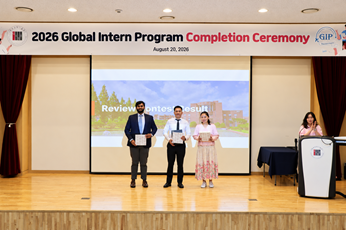
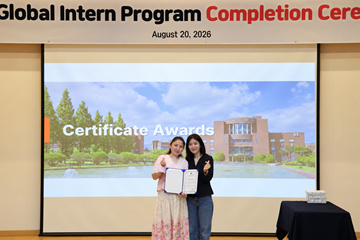
My first days in Korea also brought two memorable encounters. On the day I arrived, while travelling by bus from the airport to GIST, I accidentally sat in an elderly Korean woman’s seat. I offered to change seats, but she kindly declined and gave me candies and traditional Korean sweets. Although we communicated through gestures and translation apps, her kindness made me feel welcome and showed me how a simple gesture can bridge a language barrier. The following evening, I went to a restaurant and then a store with Korean acquaintances. While browsing, I did not notice that the others had left, and I ended up alone in the store at around 10 p.m. Fortunately, another international intern realized I was missing and came back to look for me. What felt worrying at the time later became a funny memory—and a reminder to pay attention to my surroundings when exploring an unfamiliar place. These encounters gave a personal dimension to my internship. The elderly woman’s generosity showed me the warmth I could experience through everyday interactions, while the store incident reminded me that adjusting to a new environment can bring unexpected challenges. Together, they helped me appreciate cultural understanding, patience, and the human connections that make international exchange meaningful. One of the happiest moments of my internship was the recognition of my English essay, “My Research Experiences at GIST.” It was selected as one of three recognized works in the Global Internship Program. For me, this was more than an award: it gave me an opportunity to reflect on what I had learned and express how deeply the experience had influenced my academic and personal development.
Looking back, I see the GIST Global Internship Program as much more than a short research visit. It gave me practical laboratory experience, introduced me to advanced scientific methods, strengthened my confidence, and helped me understand the importance of interdisciplinary and international cooperation. It also created a meaningful connection between my studies at SamSU and my research experience at GIST.
In the future, I hope to apply the knowledge and skills I gained in Korea to my work in Uzbekistan. I want to continue learning modern research methods, improve my ability to analyze scientific data, and explore how spectroscopy, digital technologies, and interdisciplinary approaches can contribute to new research projects. I also hope my experience will encourage other young researchers from Uzbekistan to take part in international programs, build professional networks, and bring new knowledge back to their universities and research institutions.\
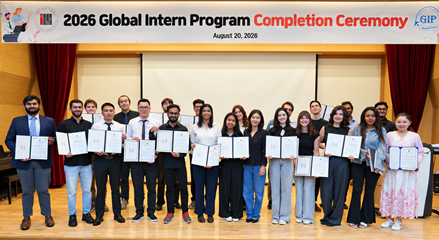
I arrived at GIST hoping to learn new techniques. I left with something greater: a broader understanding of science, greater confidence, international friendships, and a clearer vision of the researcher I want to become. For me, the internship was not the end of one academic experience, but the beginning of a new stage in my scientific journey.
By Nafosat Kuliboeva,
Laboratory Assistant, Physical and Colloid Chemistry Department
Samarkand State University, Uzbekistan