

Institute of Nuclear Technologies
Director of the Institute
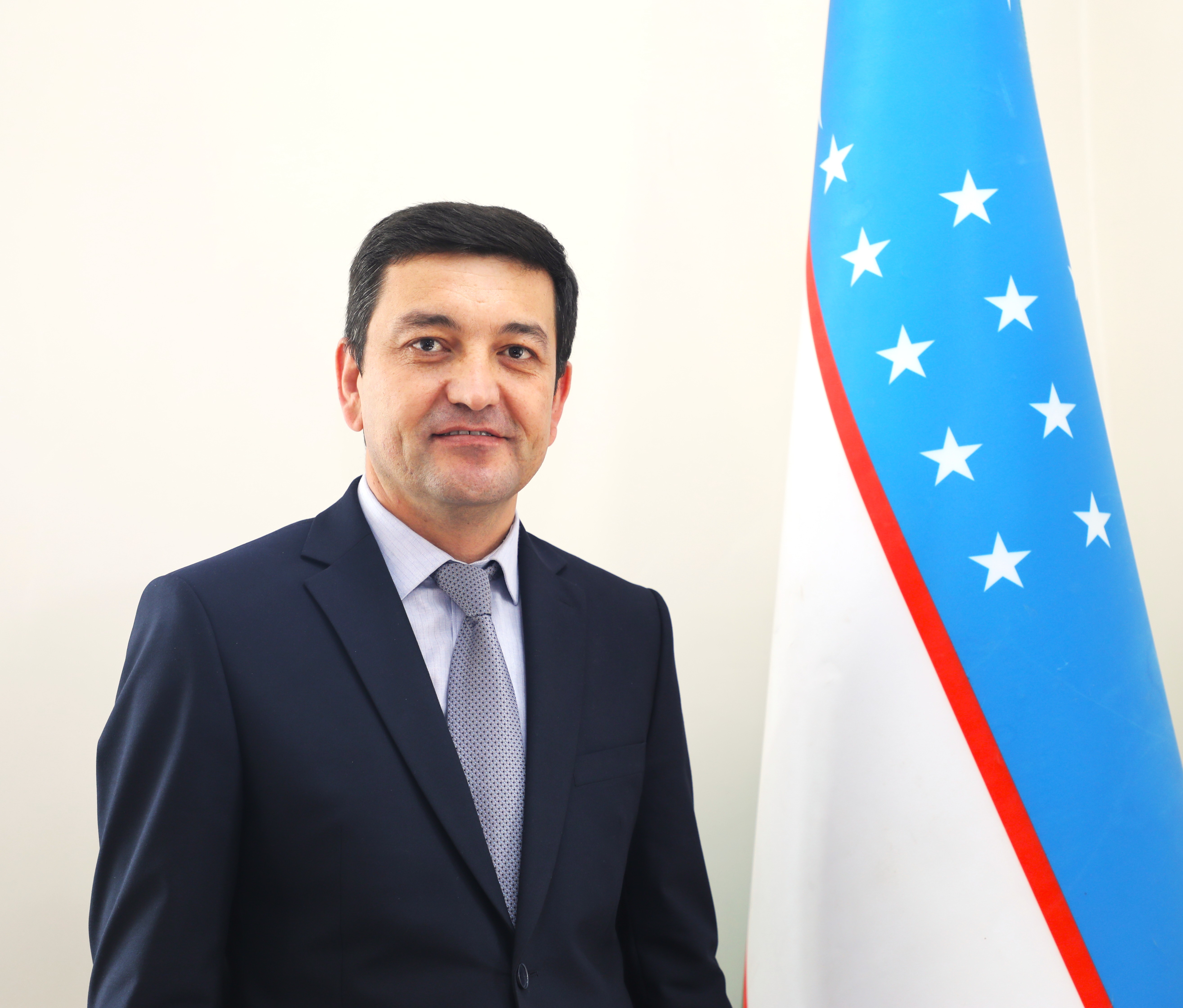
Zavkiddin Davronovich Mirtoshev
- Office hours: Daily from 14:00 to 16:00
- Phone/Fax: +99866-240-93-30
- Email: zmirtoshev@samdu.uz; zmirtoshev@gmail.com
Biography
- 2002-2006 - Student at Samarkand State University
- 2006-2008 - Laboratory assistant at Samarkand State University
- 2008-2010 - Teacher at Samarkand Financial College
- 2009-2011 - Master's student at Samarkand State University
- 2011-2017 - Teaching assistant at the Department of Astronomy, Samarkand State University
- 2017-2019 - PhD student at the Department of Astronomy, Samarkand State University
- 2019-2023 – Assistant professor at the Department of Nuclear Physics and Astronomy, Samarkand State University
- 2023-2025 - Deputy Director at the Institute of Engineering Physics, Samarkand State University
- 05.09.2025-03.11.2025 - Associate Professor at the Department of Nuclear Physics and Astronomy, Samarkand State University
- 04.11.2025 - Present - Director of the Institute of Nuclear Technologies, Samarkand State University
About the Institute of Nuclear Technologies
The Institute of Nuclear Technologies is a scientific and educational institution in the Republic of Uzbekistan, specializing in the peaceful development of nuclear technologies, their integration into science, education, and practical fields, as well as the training of highly qualified specialists in this area.
In accordance with the Decree № DP-5484 of the President of the Republic of Uzbekistan dated July 19, 2018, “Measures for the Development of Nuclear Energy in the Republic of Uzbekistan,” the Resolution № RP-4165 dated February 7, 2019, “On the Approval of the Concept for the Development of Nuclear Energy in the Republic of Uzbekistan for 2019–2029,” and the Decree on the “New Uzbekistan Development Strategy for 2022–2026,” the task of training specialists in this field was assigned to Samarkand State University. To ensure the execution of these tasks, the Institute of Nuclear Technologies was established by the order № 251-IJ dated July 4, 2025, of Samarkand State University named after Sharof Rashidov.
The Institute was established based on the Nuclear Physics Laboratory named after Academician Tolib Muminov and is currently functioning as an institution that effectively integrates modern education, scientific research, and innovative activities. The Institute consists of 2 departments, 2 scientific laboratories, 5 educational-scientific laboratories, and an astronomy educational-scientific center. Currently, around 30 professors, teachers, and research staff are working at the Institute, conducting effective scientific research in experimental nuclear physics, radiation materials science, radiobiology, radioecology, nuclear medicine, astronomy, and astrophysics. Among them, there are 4 doctors of science, professors, 6 PhD holders, associate professors, 3 senior researchers, and 6 assistants and junior researchers.
The Institute trains highly qualified specialists with modern knowledge and practical skills in bachelor's degree programs such as Physics, Medical Physics, Astronomy, Nuclear Technologies, and Nuclear Energy, as well as master's degree specialties such as Nuclear Medicine, Accelerator Physics, and Radiation Safety. During their academic and scientific activities, specialists are provided with in-depth training on working with ionizing radiation sources, radiation measurement and analysis, using accelerator devices, and applying nuclear and radiation technologies in medicine, energy, and industry sectors. These processes are carried out based on the Institute's nuclear physics and radiation analysis laboratories, ensuring a seamless integration of theory and practice.
Nuclear technologies and nuclear physics equipment and methods are widely used today across various sectors of industry and society. The scientific and applied research conducted at the Institute focuses on areas such as the mining industry, including uranium extraction enterprises, the chemical industry, radiation monitoring at borders, detecting the illegal circulation of radioactive materials, ensuring the radiation safety of food products and building materials, forensic science, oncology and nuclear medicine, agriculture, hydrometeorology, geology, environmental protection, radiation sterilization, and the ecological restoration of uranium mining areas. In addressing these critical issues, the Institute's nuclear physics and radiation analysis laboratories actively participate in scientific research, experimental testing, and the training of qualified specialists.
The Institute’s scientific and educational activities are developing based on stable international collaborations established with leading foreign scientific centers. In particular, the Institute conducts scientific research within the framework of joint cooperation agreements with the Kurchatov Institute National Research Center in the Russian Federation, the Joint Institute for Nuclear Research in Dubna, Harbin Engineering University, South China University, and the Institute of Modern Physics of the Chinese Academy of Sciences. Within the scope of these collaborations, joint scientific projects, experimental testing, academic exchanges, and programs aimed at training specialists and young researchers are being implemented.
The Institute is equipped with advanced instruments for modern atomic and nuclear physics, astronomy, spectrometry, dosimetry, and nuclear electronics. In particular, at the Astronomy Educational-Scientific Center, regular scientific observations are conducted within the framework of space weather research funded by UNESCO’s Committee on Space Research (COSPAR) and NASA, using the Solar Radio Spectrometer (CALLISTO). The data obtained from these observations are transmitted to NASA’s international database and are actively used by the global scientific community in the study of space weather phenomena.
The Institute’s professors, teachers, and research staff regularly enhance their qualifications at leading research centers in Europe, Russia, the USA, China, and India. At the same time, they conduct collaborative scientific research, and the results obtained are published in internationally renowned scientific journals.
Within the framework of international technical projects by the IAEA, the Institute has significantly strengthened its laboratory infrastructure by attracting foreign grants totaling 1 million USD. This has led to the establishment of 5 scientific and educational laboratories, where over 170 students and 20 master's students annually conduct laboratory practices.
The Institute’s laboratories include specialized underground facilities designed for electron accelerators, as well as a 300-meter underground tunnel that enables the implementation of unique experiments. In 2003, this scientific complex was designated as a “Unique Object,” and today, it is equipped with the necessary infrastructure for the implementation of modern nuclear technologies.
Bachelor’s degree programs:
- 60531200 – Medical Physics
- 60530700 – Astronomy
Master’s degree programs:
- 70530901 – Physics (by specialization)
- 70530701 – Astronomy
- 70530902 – Nuclear Physics and Nuclear Technologies (by application fields)
Doctoral degree programs:
- 01.04.08 – Atomic Nucleus and Elementary Particle Physics. Accelerator Technology
- 01.03.01 – Astronomy