Director of Center
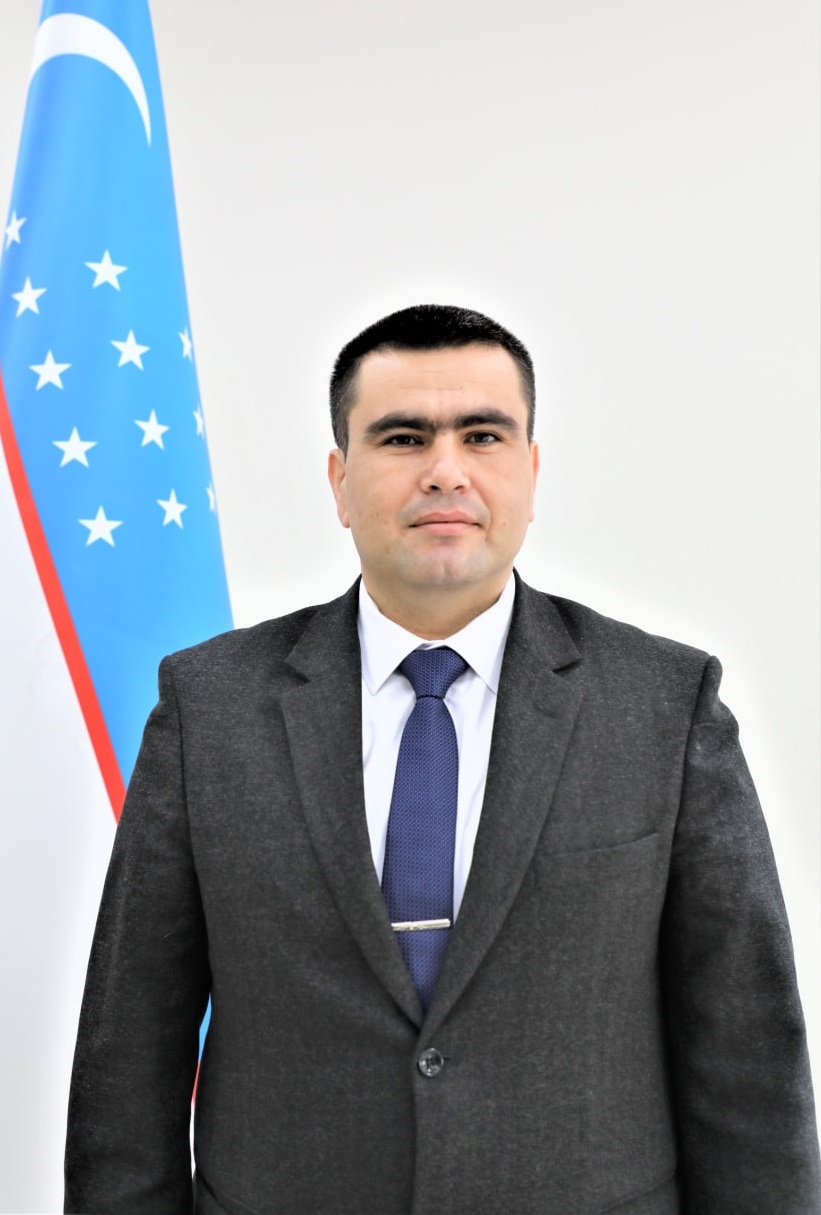
Umarov Sardor Yakubovich
- Reception days: daily from 14:00 to 16:00.
- Phone: +99891-525-25-89
- E-mail: sardor.umarov.2013@mail.ru
Biography
- 2009-2013 - student of the Faculty of History of Samarkand State University.
- 2013-2015 - Master student of the Department of General History of Samarkand State University.
- 2015-2019 - Head of the Cabinet of General History of Samarkand State University.
- 2019-2019 - Assistant of the Faculty of International Education Programs of Samarkand State University.
- 2019-2020 - Deputy Dean for Youth Affairs of the Faculty of International Education Programs of Samarkand State University.
- 2020-2022 - Deputy Dean for Academic Affairs of the Faculty of International Education Programs of Samarkand State University.
- Since 2022, director of the Center for International Education Programs of Samarkand State University named after Sh. Rashidov.
ABOUT THE CENTER
Center for International Educational Programs of Samarkand State University
In order to train highly qualified personnel with modern knowledge, in 2019, the Faculty of International Education Programs was established at Samarkand State University in cooperation with foreign higher educational institutions. In 2022, this faculty was transformed into a Center of international education programs.
The Center for International Educational Programs has joint educational programs in cooperation with leading universities in developed countries such as China, South Korea, Italy, Israel, Hinsideton, Russia, and the United States. In particular, in cooperation with Suncheonhyang University of South Korea, Yeungnam University, Shanxi Normal University of China, Holon Institute of Technology of Israel, Moscow State University of Russia, Tomsk State University, Kazan (Volga Region) Federal University, Moscow State Technological University "Stankin", Chandigarh University of India, Tusha University of Italy, and Webster University of the United States, training personnel in 8 bachelor's programs and 10 master's programs has been launched. Currently, 80 students are studying at the center, and about 100 bachelor’s and master’s students are studying at foreign partner universities.
The center offers education in the bachelor's programs in “International Relations”, “Economics”, “Applied Mathematics”, “Technological Processes, Automation and Control of Production”, “Materials Science and Technology of New Materials”, “Computer Science and Programming Technologies”, “Digital Economy”, “Chemistry” and “Software Engineering: Intelligent Transport Systems and Unmanned Platforms”. The first and second years of study in these programs are conducted at SamSU. Students who successfully complete the first two years of study continue their studies at foreign higher educational institutions at the next stage. Students who successfully complete their studies abroad in these programs receive a double diploma from SamSU and foreign partner universities.
The center has established 10 joint educational programs in master's specialties. The master’s degree prepares specialists in the following specialties: “Simultaneous Translation”, “International Relations and Modern Political Processes”, “Psychology”, “Accounting” and “Management: International Management”, “Country Studies”, “Biology: Bioinformatics”, “Geology”, “Data Science: Data Analysis for Business”, “Artificial Intelligence”, “Biotechnology”, “Agrobiotechnology” and “Viticulture and Winemaking”. Students studying in the master's degree program spend the first year of their studies at SamSU and the second year at a foreign university. To date, more than 20 master's degree students who have successfully completed their studies abroad have received dual diplomas from SamSU and foreign partner universities.
In order to organize educational processes effectively and at a high level, the center has attracted qualified local and foreign professors and teachers. To date, 4 specialists from foreign partner universities are permanently working at the center. In particular, 1 professor from China, 1 from India, 1 from Japan, and 1 from South Korea are teaching students at the center. In the future, it is planned to permanently involve about 10 foreign specialists in the educational process.
JOINT EDUCATIONAL PROGRAMS ABOUT GRADUATES
QUALIFICATION REQUIREMENTS
Bachelor's degree qualification requirements
International Relations (Republic of Korea, Sunchunhyang University)
Economics (Republic of Korea, Yeungnam University)
Applied Mathematics (Israel, Holon Institute of Technology)
Computer Science and Programming Technologies (by major - Israel, Holon Institute of Technology)
Materials Science and New Materials Technology (by major - Russian Federation, STANKIN Moscow State Technological University)
Technological Processes, Automation and Control of Production (Russian Federation, STANKIN Moscow State Technological University)
Digital Economy (by major and sector - Russian Federation, Tomsk State University)
Chemistry (Russian Federation, Moscow State University, China, Joint University of Moscow State University-Beijing Polytechnic Institute)
Software Engineering: Intelligent Transport Systems and Unmanned Platforms (Russian Federation, Kazan (Volga Region) Federal University)
Master's degree qualification requirements
Simultaneous Interpreting (Russian Federation, Kazan (Volga Region) Federal University)
International Relations and Modern Political Processes (Russian Federation, Russian State University for the Humanities)
Psychology (India, Chandigarh University)
Accounting (Russian Federation, Tomsk State University)
Data Science: Data Analysis for Business (Russian Federation, Tomsk State University)
Artificial Intelligence (India, Chandigarh University)
Agrobiotechnology (Italy, Tusha University)
About Joint Educational Programs

