

Center for Asian Studies

Azim Malikov
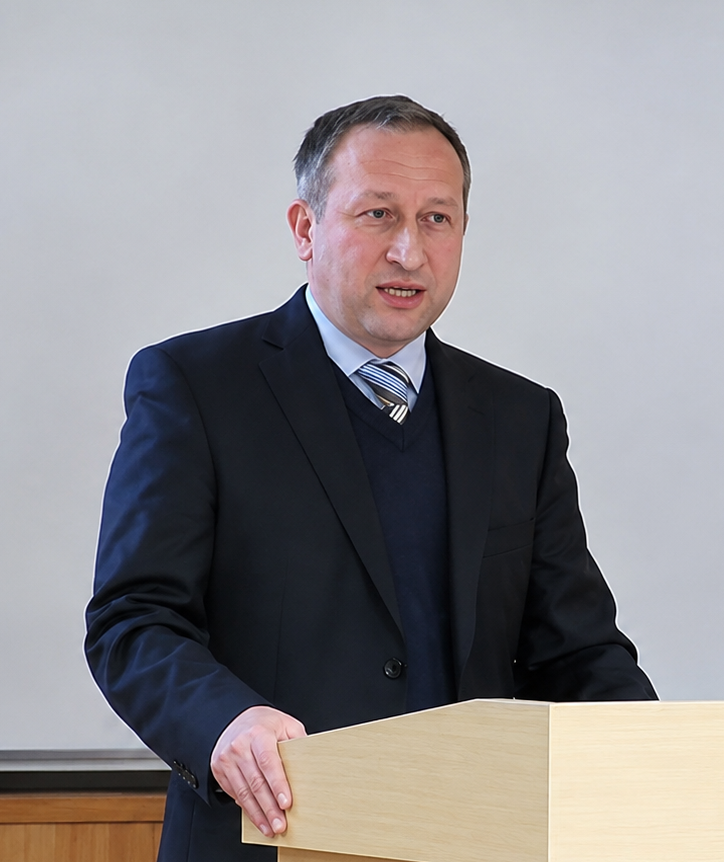
PhD in History, Associate Professor, is a social anthropologist and historian.
Since 2025, he has held the position of Executive Director of the Center for Asian Studies at the Faculty of History of Samarkand State University named after Sharof Rashidov.
He is also a lecturer in the Department of Asian Studies and a lecturer and researcher at the Sinophone Research Center at Palacký University Olomouc (Czech Republic).
His research interests include history, anthropology, Islam, the development of historical science, identity formation, memory politics, and the transregional connections of Asian societies.
Throughout his career, he conducted research at the Institute of History of the Academy of Sciences of Uzbekistan and Samarkand State University, as well as at prestigious global research centers and universities—including Harvard University (USA), the Max Planck Institute for Social Anthropology (Germany), and Hokkaido University (Japan)—and other international academic institutions.
Azim Malikov actively participates in international research projects and conferences, making a significant contribution to the development of scientific cooperation in the fields of Asian studies, history, and anthropology, as well as to the training of highly qualified specialists.
Feruza Rashidova
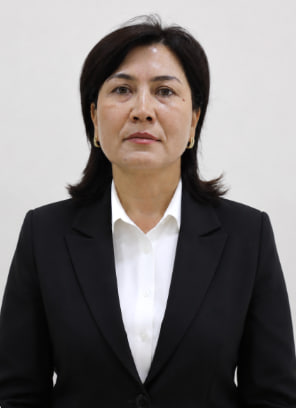
holds a PhD in Historical Sciences and is an Associate Professor. Since 2006, she has been working at the Department of World History at Samarkand State University named after Sharof Rashidov.
In 2019, she received PhD in Historical Sciences with a dissertation titled “The Role of Foreign Investment in the Formation and Development of Small Business and Private Entrepreneurship in Uzbekistan (A Historical Approach)”.
Since 2025, she has served as Deputy Director of the Center for Asian Studies at the Faculty of History of Samarkand State University named after Sharof Rashidov.
Her research activities cover the modern history of Uzbekistan, economic history, international investment, cooperation with Asian countries, and historiography.
Feruza Rashidova is the author of one monograph, one study guide, and over 30 scientific articles. Her scholarly output includes articles published in prestigious journals indexed in the Scopus database. She regularly participates in international scientific conferences and research projects, making a significant contribution to the development of scientific cooperation in the field of Asian studies.
Center for Asian Studies
Faculty of History, Sharof Rashidov Samarkand State University
Mission
The Center for Asian Studies was established to promote comprehensive and interdisciplinary research on the history, cultures, religions, political systems, and social development of Asian countries. The Center is also dedicated to training highly qualified specialists and fostering international academic cooperation.
Main Objectives
- Conduct fundamental and applied research on Asian countries.
- Develop and implement interdisciplinary research projects supported by national and international grants.
- Organize international conferences, seminars, workshops, and roundtable discussions.
- Publish scholarly articles, monographs, and analytical reports.
- Develop specialized courses for Master's and PhD programs.
- Provide academic support and mentoring for young researchers and doctoral students.
- Strengthen cooperation with universities and research institutions across Asia.
- Establish academic databases and digital resources on the history and cultures of Asia.
- Organize educational and public outreach activities promoting the cultural heritage of Asian peoples.
Strategic Goals
Promoting Interdisciplinary Asian Studies
Advance research on the history, politics, religions, cultures, and societies of Asia through the integration of the humanities and social sciences, including history, anthropology, economics, religious studies, and related disciplines. Foster comparative and transregional studies covering Central, South, East, Southeast and West Asia.
Producing World-Class Scholarship
Support fundamental and applied research projects. Publish high-quality monographs and peer-reviewed journal articles. Develop specialized research schools in key fields of Asian Studies, including Central Asian Studies, Chinese Studies, Islamic Studies in Asia, and other regional specializations.
Training Experts on Asia
Develop Master's and PhD degree programs in Asian Studies. Promote language training in English, Chinese, Japanese, Korean, Turkish, Persian, Hindi, and other Asian languages. Prepare experts for careers in diplomacy, international organizations, business, government institutions, and policy research.
Expanding International Academic Cooperation
Establish partnerships with leading universities and research institutions throughout Asia. Implement joint research projects and organize international conferences. Promote academic mobility programs for faculty members, researchers, and students.
Expert, Policy, and Public Engagement
Produce analytical reports on contemporary political and social developments across Asia. Organize public lectures, academic seminars, and cultural and educational events to strengthen public understanding of Asian societies.
Main Areas of Activity
Research Activities
- Preparation and implementation of national and international grant projects.
- Conducting fieldwork and archival research.
- Developing digital databases and electronic archives.
- Supporting early-career researchers, postdoctoral fellows, and doctoral students.
Educational Activities
- Designing university courses on the history and contemporary developments of Asia.
- Organizing lectures by distinguished international scholars and visiting professors.
- Conducting interdisciplinary academic seminars and workshops.
Academic and Organizational Activities
- Organizing international conferences, symposiums, and scientific seminars.
- Publishing a scholarly academic journal.
- Establishing expert platforms dedicated to current issues in Asian history, culture, ethnology, religion, and related fields.
Cultural and Public Outreach
- Promoting public knowledge and understanding of Asia.
- Developing cooperation with the media, educational institutions, and civil society organizations.