MUSEUM OF GEOLOGY AND PALEONTOLOGY
A Mirror of Earth's History: The Geology and Paleontology Museum of Samarkand State University named after Sharof Rashidov
The Geology and Paleontology Museum, operating under the Faculty of Geography and Ecology of Samarkand State University named after Sharof Rashidov, is an open scientific and educational center for the general public, researchers, faculty members, and students. The museum provides visitors with the opportunity to gain in-depth knowledge about the geological history of Earth, rocks, minerals, and fossilized remains of ancient organisms, as well as to conduct research and gain practical experience.
The museum is open to:
- local community;
- researchers and scientists;
- faculty members;
- undergraduate, graduate, and doctoral students;
- anyone interested in geology, paleontology, and natural sciences.
Purpose of the Museum
The main goal of the museum is to collect, preserve, systematize, display, study, and popularize scientific information related to Earth’s geological development, natural resources, minerals, rocks, and ancient life forms.
Functions of the Museum
The museum operates in the following areas:
- Research activity — studying geological and paleontological samples and analyzing Earth's evolutionary stages;
- Educational-practical activity — strengthening students’ theoretical knowledge through real specimens;
- Educational outreach — raising awareness about Earth’s history and natural resources;
- Accessibility — providing conditions for scientific and educational use of exhibits;
- Preservation of natural heritage — safeguarding rare samples for future generations.
The museum is not only a scientific center but also a unique treasury reflecting billions of years of Earth's history.
It houses both Uzbekistan’s geological heritage and international exhibits, each with significant scientific value. It reflects the origins of life and geological formation processes of the planet.
The museum was founded in 1938 by V.P. Smirnov, L.V. Azarova, Ya.A. Leven, V.N. Preobrazhensky, and N.A. Losev.
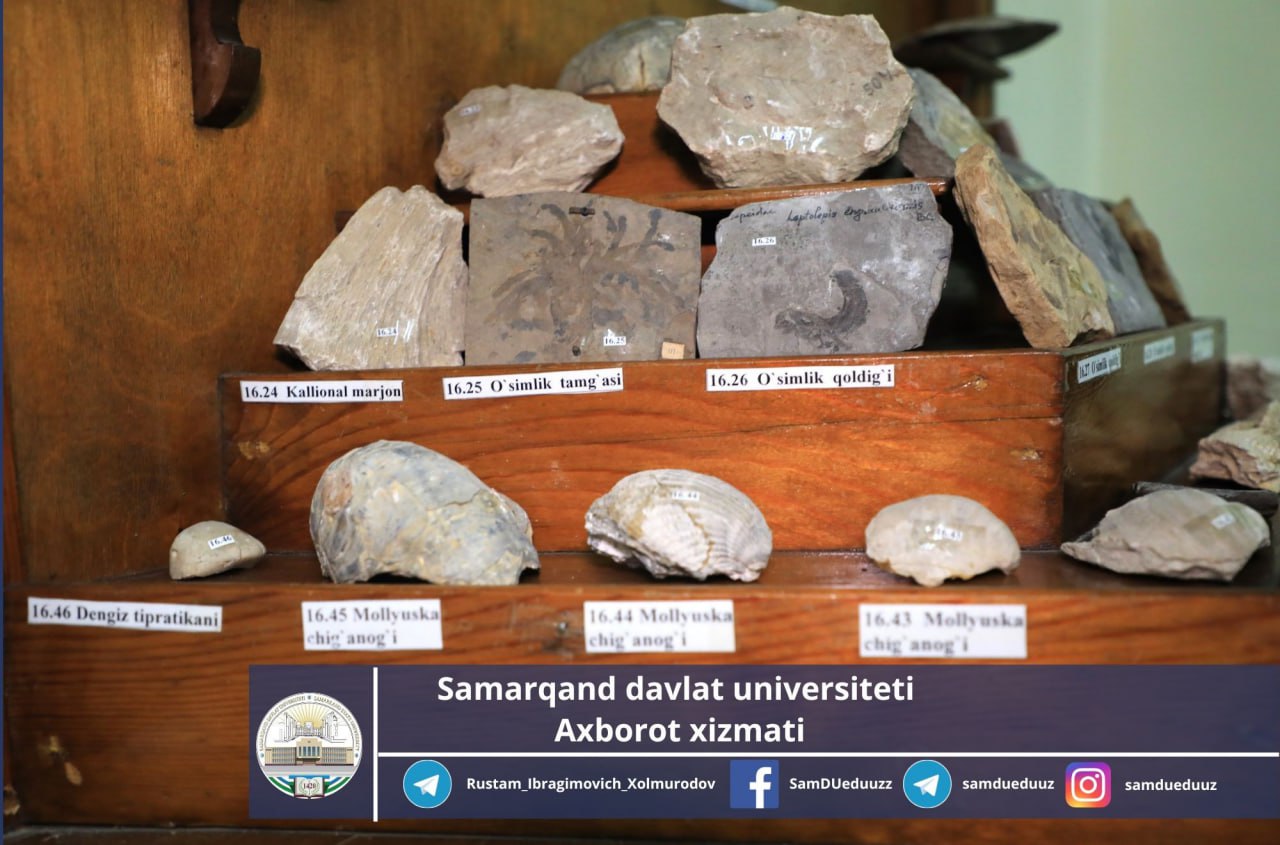
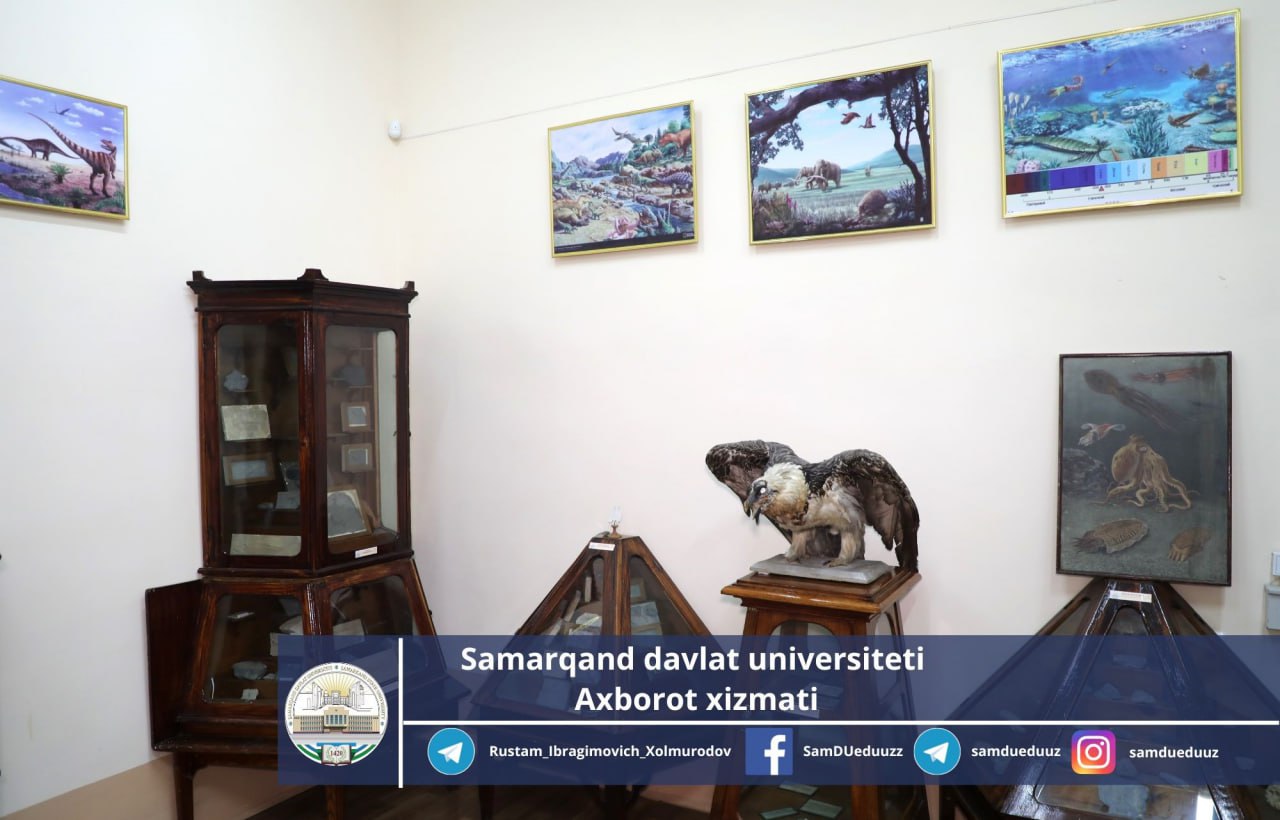
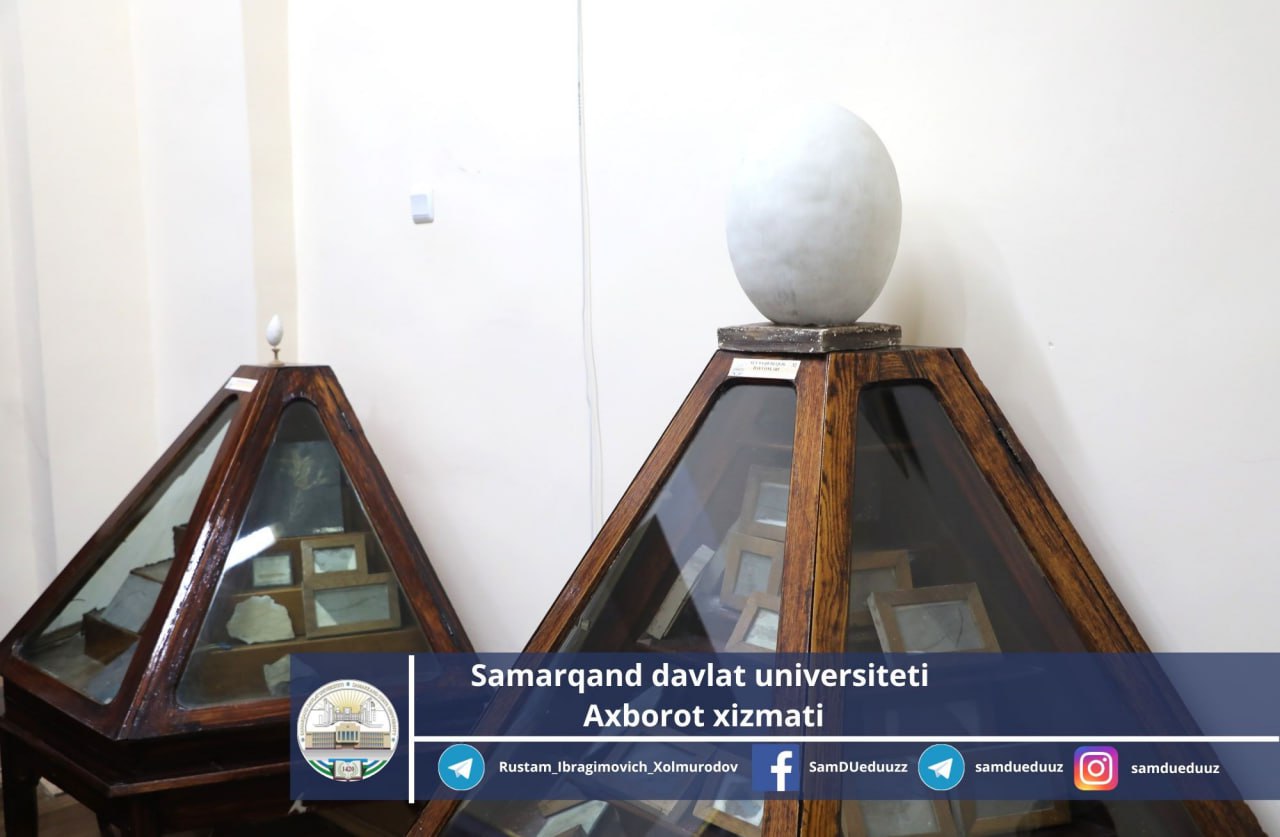
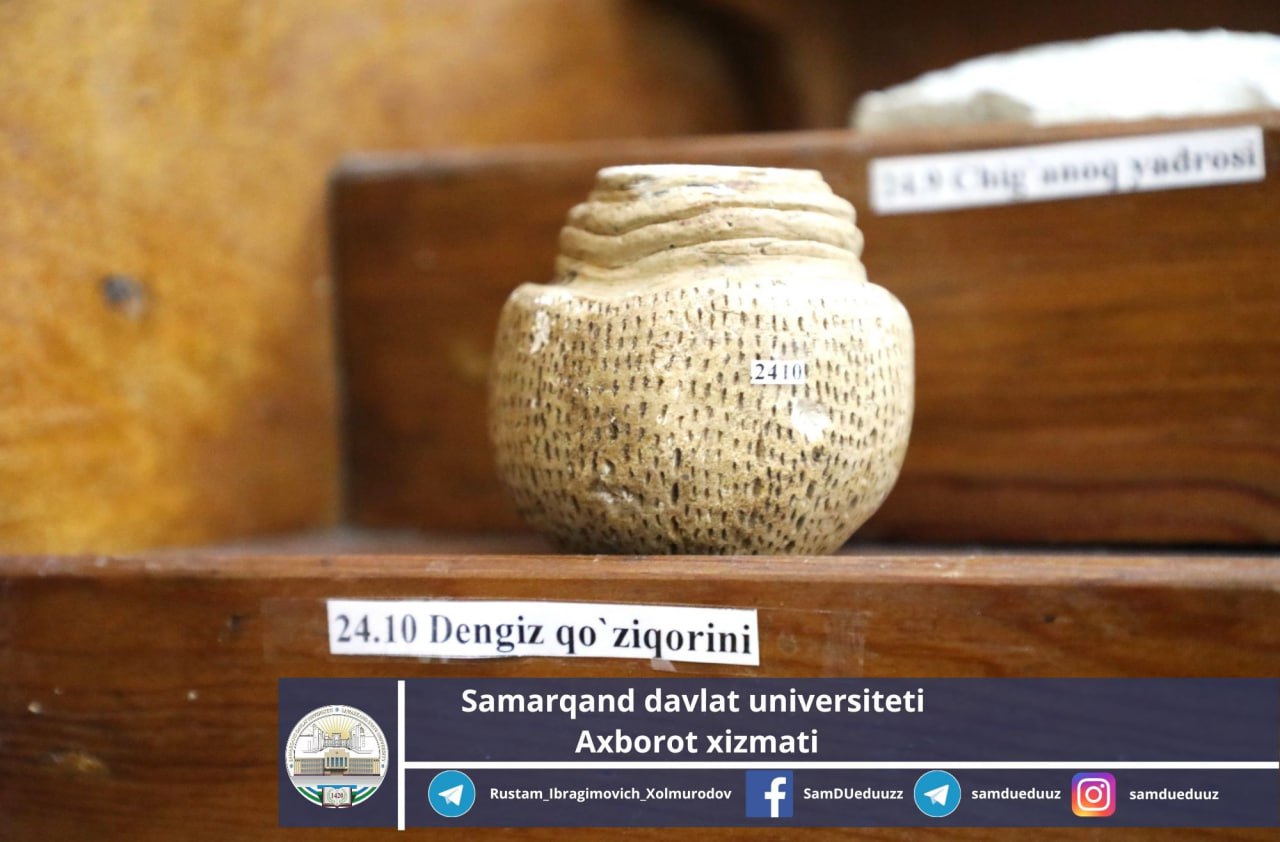
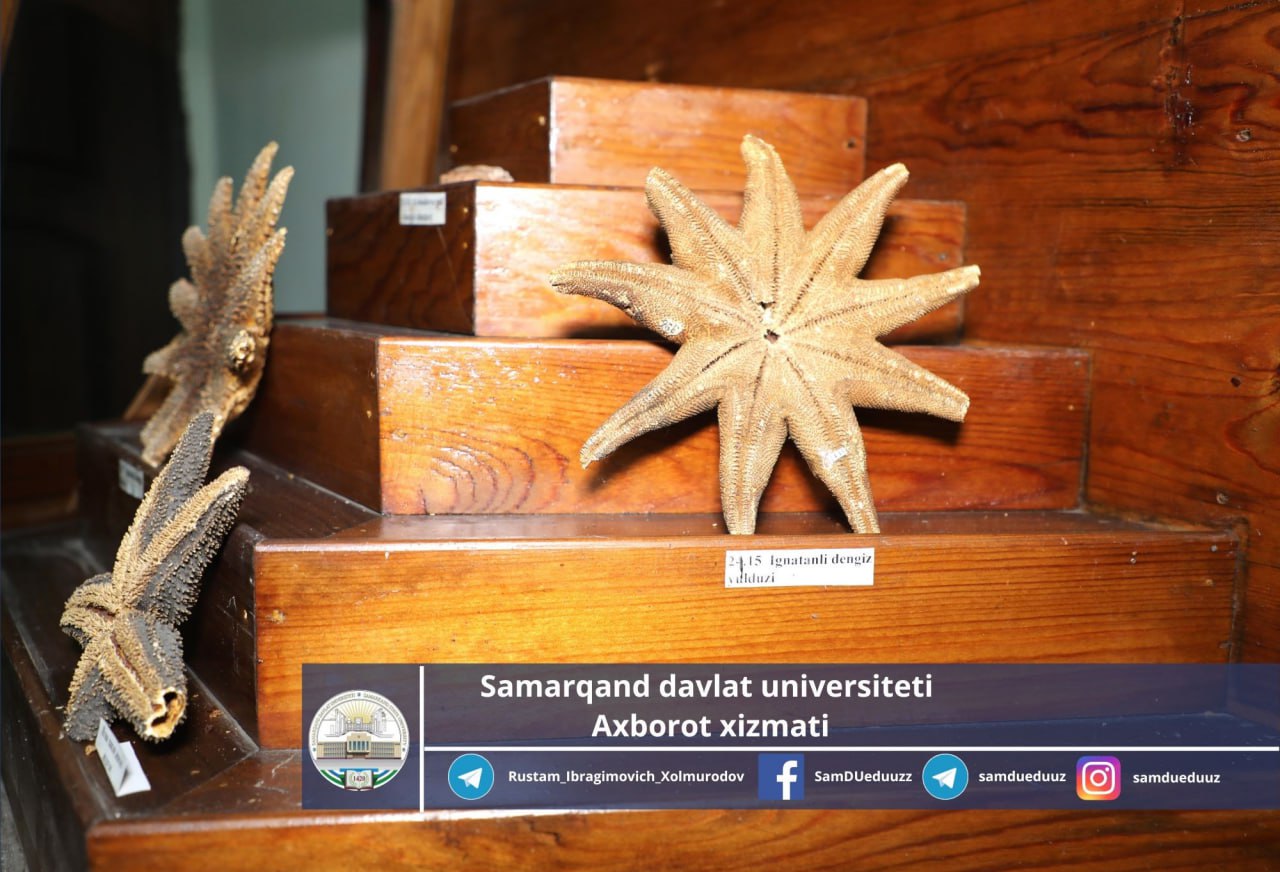
It includes three exhibition halls displaying igneous, metamorphic, and sedimentary rocks, as well as fossils of ancient organisms.
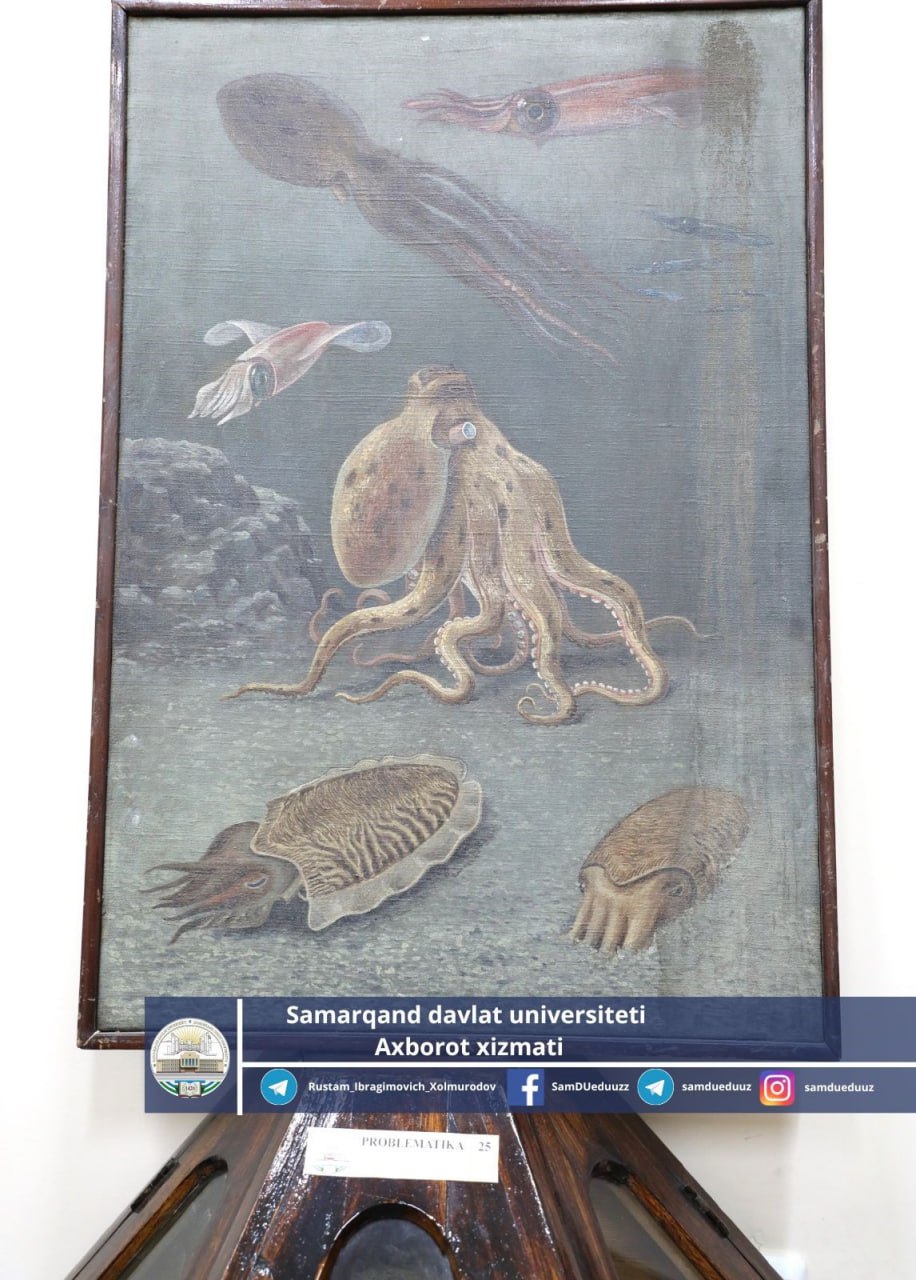
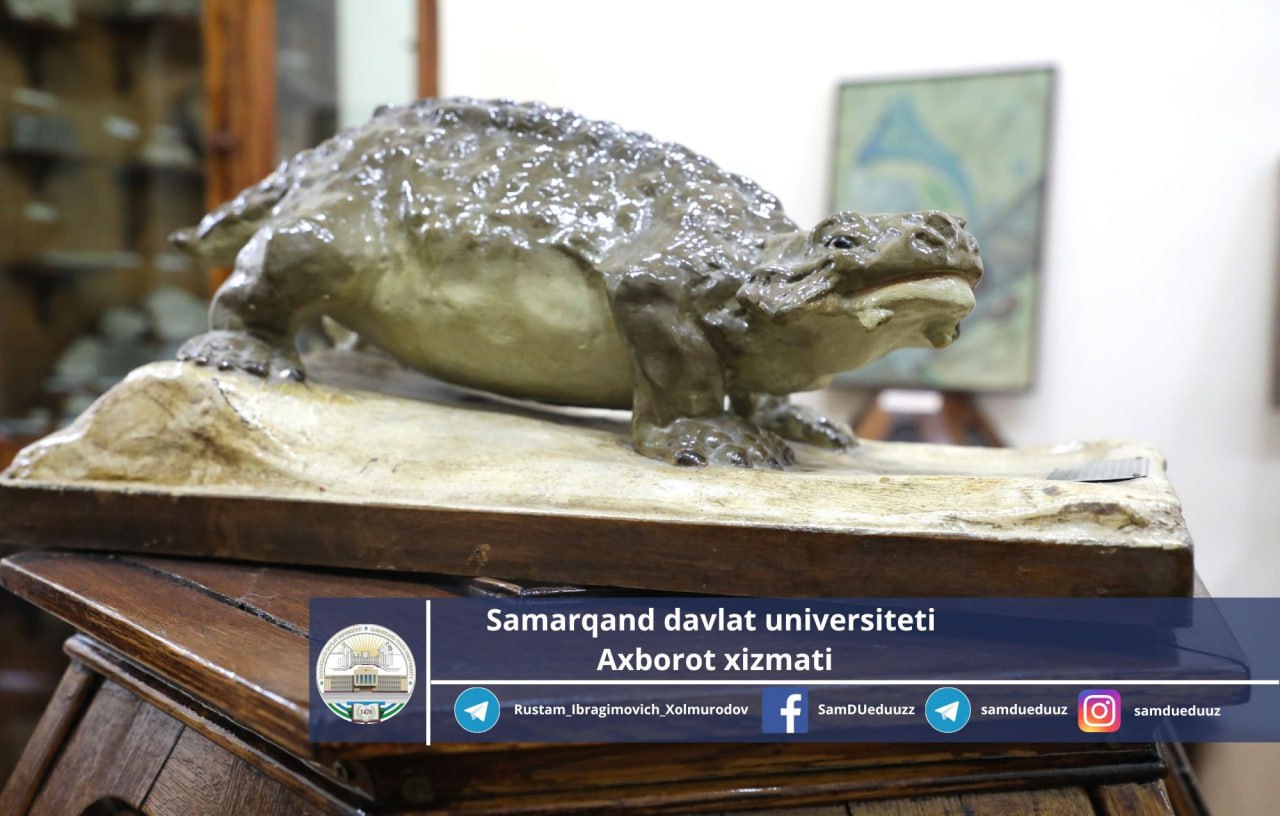
The museum contains over 5000 rare exhibits, including:
- 1000+ paleontological samples;
- 500+ historical geology exhibits;
- 2000+ mineral and rock samples.
Some collections were unfortunately lost due to relocations.
Exhibits include samples from Italy, Spain, France, Austria, India, and Mongolia.
Today, the museum functions as a research and laboratory center where students gain practical knowledge in geology and related fields.
Recent government reforms have significantly supported museum development in Uzbekistan.
The museum serves as a golden bridge between the past and the future.